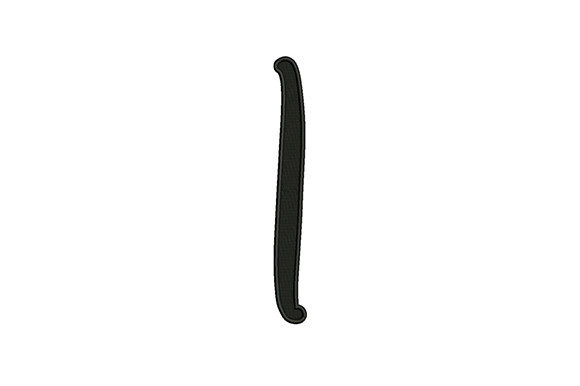
One 1 Number: A Seasonal Embroidery Staple
First Impressions: Simple, Sweet, and Surprisingly Versatile
As an embroidery designer who’s built dozens of seasonal collections for Etsy sellers, craft fairs, and small-batch apparel brands, my first glance at One 1 Number told me everything I needed to know: this isn’t just a number—it’s a mood. Clean lines, balanced proportions, and subtle rounded terminals give it a soft, approachable charm—neither too playful nor overly formal. It reads as cute and modern, with just enough warmth to feel cozy in fall, festive in December, and fresh for back-to-school launches. There’s no excessive fill stitching or fragile detail, so it avoids the “fussy” trap many holiday numbers fall into. That simplicity is its superpower—especially when you’re designing for real-world production, not just digital previews.
Where It Shines: Real Holiday & Seasonal Product Applications
One 1 Number works beautifully across high-demand seasonal categories—not as a standalone hero, but as a quiet, confident accent that elevates intentionality. Think family matching sweatshirts for New Year’s Eve photos, where each child wears their age embroidered on the chest. Or tote bag designs for teacher appreciation week—paired with a tiny apple or chalkboard motif, it personalizes without overwhelming. On kitchen towel embroidery, it adds gentle character to farmhouse-style linens; on pillow covers, it grounds minimalist nursery decor with quiet meaning (think “1st Christmas,” “1st Birthday,” or “Our First Home”).
For embroidered patch collectors, One 1 Number scales cleanly to 2–3 inches—ideal for sew-on badges on backpacks or denim jackets. As a personalized gift, it pairs effortlessly with monograms, birth flowers, or tiny stars in mockups. And yes—it fits naturally into the School category too: stitch it onto backpacks, lunchbox wraps, or PE shirts for kindergarteners celebrating their very first year. Its clean aesthetic also translates well into printable mockup assets—no pixelation, no redrawn vectors needed.
Smart Pairings for Etsy Sellers & Small Shop Products
Etsy shoppers love narrative-driven listings—and One 1 Number invites storytelling. Bundle it with coordinating designs (a single star, a tiny crown, or a simple banner) and market as a “1st Milestone Collection.” Use realistic product mockups showing the design on oatmeal-toned sweatshirts, ivory linen pillow covers, and natural cotton tote bags—this builds customer trust and reinforces brand consistency. On social media, show time-lapse stitching clips or flat lays with handwritten notes (“For baby’s first birthday,” “To celebrate your 1st year teaching”)—these visuals spark engagement during holiday shopping periods because they tap into emotional resonance, not just decoration.
At craft fairs, display One 1 Number stitched on multiple substrates side-by-side: a lightweight apron, a thick terry towel, a curved baseball cap. This demonstrates versatility—and reassures buyers it’s been tested beyond screen previews. For limited edition apparel drops, use it to mark exclusivity (“Edition 1 of 50”) subtly on garment hems or inner neck labels—elevating perceived product value without shouting.
Where to Proceed with Care
Even simple designs demand thoughtful execution. With One 1 Number, avoid pushing boundaries where clarity and durability matter most. Don’t shrink it below 1.25 inches on small hoop sizes—fine terminals may vanish or stitch poorly on dense fabrics like thick towels or fleece-backed sweatshirts. On dark fabric, test thread colors thoroughly: a pale yellow or heather grey may disappear, while cream or oatmeal pops softly without glare. Skip metallic thread unless you’ve verified stitch density allows smooth travel—this design’s flow relies on consistent tension, not flash.
Be cautious on stretchy garments (like ribbed knits) without proper cutaway stabilizer—the number’s clean shape can warp if the base fabric gives. And while it works on curved caps, always confirm hoop compatibility and adjust placement to avoid distortion near the bill seam. Remember: fabric texture changes everything. A crisp cotton poplin will render fine edges beautifully; heavy burlap may swallow them entirely.
Design Notes Every Embroidery Professional Should Apply
- Always test stitch on both light and dark fabric swatches—don’t rely on screen color alone.
- Review stitch density: if the file feels sparse on large fills or overly tight in curves, adjust underlay or reduce density slightly for smoother wear.
- Confirm hoop size before digitizing companion elements—consistency matters when building themed bundles.
- Use stabilizer appropriate for your substrate: tear-away for stable wovens, cutaway for knits, and heavy-duty for terry cloth.
- Create realistic mockups—not just white backgrounds. Show how One 1 Number lives on real products, in natural lighting.
- Zoom in post-stitching: check terminal points, corner sharpness, and thread coverage—especially after washing tests.
- Plan matching color palettes across your seasonal line: if you use sage green here, carry it into coordinating motifs.
- Verify commercial embroidery rights before selling finished products—this is non-negotiable for digital embroidery file buyers running small shops.
Why This Design Earns a Spot in Your Seasonal Lineup
One 1 Number doesn’t shout—but it lingers. In a crowded holiday marketplace, that quiet confidence converts. It supports handmade gift authenticity without demanding complex execution. It boosts giftability by anchoring sentiment (“firsts,” “new beginnings,” “fresh starts”) in something tactile and timeless. And because it’s rooted in clarity—not clutter—it aligns seamlessly with modern aesthetics while feeling warmly nostalgic. For apparel decorators, crafters, and Etsy sellers, it’s not just another machine embroidery design. It’s a versatile, emotionally intelligent tool—one that helps customers say what matters, simply and sincerely.