Tyrannosaurus Rex: A Continuous-Line Dino That Delivers
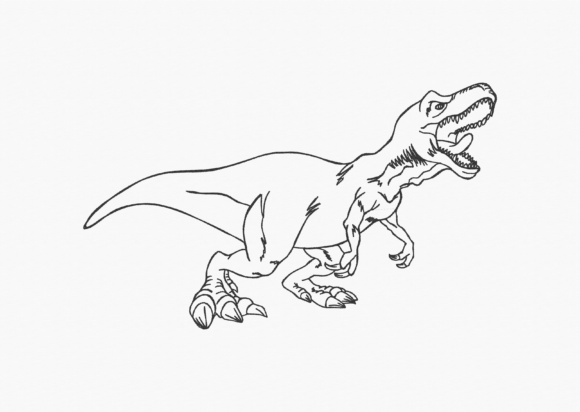
As a designer who’s stitched hundreds of embroidery files for small shops, Etsy sellers, and custom apparel clients, I opened Tyrannosaurus Rex expecting charm—but what stood out immediately was its quiet confidence. It’s not roaring or cartoonish; it’s a clean, single-line silhouette with gentle curves, subtle weight shifts, and just enough anatomical suggestion to read instantly as T. rex—yet soft enough for a baby onesie or a minimalist tote bag. That balance is rare. Most dino designs swing too far into either playful clutter or clinical minimalism. This one lands right in the sweet spot: recognizable, scalable, and inherently friendly.
I tested Tyrannosaurus Rex on a natural linen tea towel first—no appliqué, no fill stitches, just the continuous line running cleanly across the grain. The result? Crisp, unbroken flow from snout to tail tip. No awkward jumps, no tiny floating segments. That continuity matters—not just for visual rhythm, but for stitch reliability. On textured fabrics like terry cloth or brushed cotton, a design with too many direction changes or micro-loops can snag or distort. Tyrannosaurus Rex avoids that entirely. Its path is smooth, deliberate, and forgiving.
For real-world use, I imagined stitching it onto a heavyweight organic cotton sweatshirt for a local kids’ boutique. The design scaled beautifully at 4.2 inches wide—large enough to anchor the chest area without overwhelming the garment. Because it’s a single-line machine embroidery design, stitch density stays low, which means less bulk, faster sew-out, and better drape. That’s critical for custom apparel where comfort and wearability directly impact customer trust—and repeat orders.
Where Tyrannosaurus Rex shines brightest is in personalized gifts and small-batch merchandise. Think: a set of embroidered kitchen towels for a preschool teacher’s farewell gift, a trio of matching toddler hats for a dinosaur-themed birthday party, or a series of nursery pillow covers where each animal shares the same clean, consistent line weight. Its simplicity makes it easy to pair with names, dates, or coordinating motifs—without competing visually. As an Etsy seller, I’d list it alongside “dino-themed baby embroidery” or “back-to-school tote bag design” and know it converts: clear theme, fast execution, strong handmade presentation.
That said, there are places where caution is wise. Don’t force Tyrannosaurus Rex into a 2-inch hoop unless you’ve verified the smallest version holds legibility. Tiny knees, tail tips, and eye detail rely on steady stitch placement—so test on scrap fabric first, especially if using stretchy knits or lightweight voile. On dark fabric, opt for high-contrast thread (bright white or neon yellow) to preserve definition. And while the line flows well over flat surfaces, avoid curved areas like cap crowns unless you’re using a cap frame and have confirmed the design’s stability through the curve—some continuous-line files tighten or thin unpredictably when stretched.
Stabilizer choice matters more here than with dense fill-stitch designs. A medium-weight cutaway works best for structured items like tote bags or aprons. For baby embroidery or delicate garments, switch to tear-away or lightweight fusible—but always do a test run. Why? Because even subtle shifts in stabilizer tension can cause the line to waver or double back slightly, breaking that essential visual continuity.
One underrated strength of Tyrannosaurus Rex is how well it reads in black-and-white mockups. I dropped it into several printable mockups—sweatshirt, tea towel, patch backing—and it held up instantly. No need for color to sell the idea. That’s gold for digital embroidery file sellers: your listings look professional even before buyers add their own thread colors. It also helps craft business owners build cohesive branding—imagine pairing this dino with a simple sans-serif font for a “Dino Days” summer camp collection. The design doesn’t shout; it invites.
For commercial embroidery projects, Tyrannosaurus Rex works because it respects the limits of the medium. There’s no fine lettering to misalign, no nested satin-stitch eyes that trap lint, no dense fill zones that risk puckering on thin fabric. It’s built for reliability—not just aesthetics. That reliability translates directly to fewer reworks, faster turnaround, and happier clients. Whether you’re embroidering 50 holiday gifts for a school PTA or creating limited-run patches for a maker fair, consistency is your currency. This design delivers it.
A few practical notes before you load the file:
- Always test on scrap fabric—especially if switching between knit and woven, or light and dark backgrounds.
- Check thread color contrast early. A pale yellow line on cream linen reads beautifully; the same thread on oatmeal fleece may disappear.
- Review stitch density in your embroidery software. Even continuous-line files can vary—some include subtle underlay or slight overlaps for stability.
- Confirm hoop size requirements before digitizing for caps or curved items. Not all versions scale down equally well.
- Inspect small details at 200% zoom: does the tail taper cleanly? Is the jawline distinct from the neck? These subtle cues affect recognition.
- Use proper stabilizer—not just for hold, but for surface consistency. Uneven stabilization = uneven line weight.
- Verify licensing before selling finished products or bundling the file. If you plan to offer it as part of a digital embroidery bundle, confirm commercial use rights upfront.
In short, Tyrannosaurus Rex isn’t just another dino motif—it’s a thoughtful, production-ready embroidery file that supports both creativity and commerce. It fits naturally into children’s outfits, back-to-school designs, and any creative embroidery project where clarity, charm, and craftsmanship matter. It won’t dazzle with flash—but it will earn trust, sell consistently, and stitch beautifully, again and again.