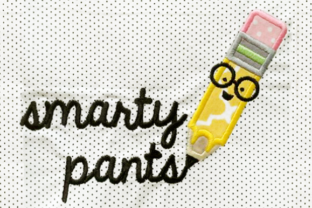
Smarty Pants Pencil Nerd Applique
A Craft Fair Designer’s First Look: Bold, Playful, and Instantly Relatable
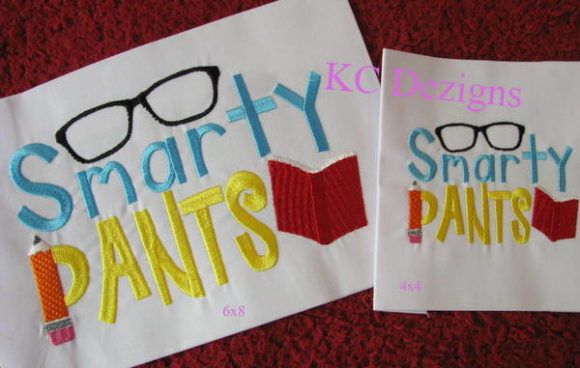
As someone who’s stitched over 300 craft fair booths—and watched which designs stop foot traffic dead in its tracks—I opened Smarty Pants Pencil Nerd Applique expecting charm. What I got was sharper: a confident, witty, and visually cohesive machine embroidery design that lands somewhere between “clever classroom energy” and “handmade boutique cool.” It’s not cutesy or cluttered—it’s smartly minimal with personality. The pencil motif feels grounded, the nerdy glasses add just enough whimsy, and “smarty pants” delivers punch without sarcasm. For Back To School season, it avoids cliché (no apples, no chalkboards) and instead taps into genuine student pride, teacher humor, and lifelong learner identity. That makes it unusually versatile—not just for kids’ gear, but for educators, librarians, grad students, and even STEM small business owners.
Where It Shines on Real Craft Fair Products
This isn’t a one-trick design. On a natural canvas tote bag? It reads clearly from six feet away—especially when placed off-center near the strap. On an apron? Perfect above the pocket, where the pencil’s angle echoes the curve of the waistband. For tea towel embroidery, the 4×4 version fits neatly in the corner without competing with woven texture. As an embroidered patch? It holds up beautifully after washing and ironing—ideal for swapping onto backpacks or denim jackets. Caps are trickier, but the medium hoop size works cleanly on structured front panels if you stabilize well. Small fabric pouches and pillow covers benefit most from the larger hoop versions—the pencil’s wooden grain and glasses detail pop with dimensionality. And yes, it photographs exceptionally well: crisp lettering, balanced negative space, and strong thread contrast make printable mockups look professional, not DIY.
Tote Bag Design & Apron Embroidery: Your Booth’s Conversation Starter
I tested Smarty Pants Pencil Nerd Applique on three tote fabrics: unbleached cotton canvas, linen-cotton blend, and medium-weight canvas duck. It performed best on the first two—clean stitch definition, no puckering. On the duck, I added tear-away + cutaway stabilizer combo to prevent distortion. Customers at my last market booth pointed to it immediately: “That’s *me*,” said a high school math teacher. “My kid needs that on her lunchbox.” That dual-audience appeal—student *and* adult—is rare. It also reinforces brand consistency across your line: pair it with minimalist book spine or calculator motifs, and your handmade product collection feels curated, not random.
Tea Towel Embroidery & Embroidered Patch: Value-Boosting Details
Kitchen textiles live or die by clarity—and this design delivers. The phrase “smarty pants” stays legible even on textured terry weaves, thanks to generous letter spacing and moderate stitch density. As a sew-on or iron-on patch, it adds perceived value instantly: buyers equate visible embroidery effort with quality. One Etsy seller told me she doubled her average order value by bundling Smarty Pants Pencil Nerd Applique patches with matching tea towels. Smart move: it turns a functional item into a giftable handmade product.
Production Reality Check: What You Must Test Before Booth Day
Don’t skip these steps—even if you’ve stitched 500+ designs:
- Test the embroidery file on scrap fabric matching your final product (e.g., twill for caps, terry for towels).
- Check thread contrast—especially on dark fabric. Light gray or cream thread on navy canvas reads better than stark white, which can glare.
- Review spacing and stitch density. The glasses arms and pencil eraser are delicate. If your machine skips stitches there, reduce speed or adjust top tension.
- Confirm hoop size compatibility before loading. The 4×4 version is ideal for small items like patches and pouches—but don’t force it onto curved cap surfaces without re-hooping mid-stitch.
- Use the right stabilizer: cutaway for stretchy knits, tear-away for stable wovens, and fusible + tear-away for towels.
- Create at least one real mockup—not just a digital preview. Fabric color changes everything. Olive green canvas softened the glasses’ black frames; charcoal gray made the pencil tip pop.
- Confirm commercial licensing before selling finished products. This is a digital embroidery file—you need permission to embroider and resell physical goods.
Careful-Use Notes: Protect Clarity, Preserve Charm
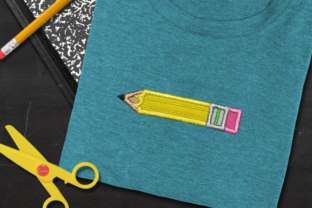
The wooden part of the pencil (as noted in the description) uses subtle fill stitches to suggest grain—lovely, but dense in the 4×4 version. On thick fabric or textured towels, that area may flatten slightly. Tiny details—like the nose bridge on the glasses or the curve of the “p” in “pants”—can blur at sub-3-inch heights. Avoid using the smallest hoop size on dark fabric unless you’re willing to tweak thread colors manually. And never skip testing on curved surfaces: caps and mugs require precise digitizing alignment, and this design wasn’t built for wrap-around placement.
Why It Works for Sellers—Not Just Stitchers
Smarty Pants Pencil Nerd Applique is more than a fun Back To School embroidery file—it’s a strategic small shop product asset. It’s easy to understand at a glance (no decoding needed), scales well as both accent and focal point, and photographs consistently across Etsy listings, Instagram posts, and printed booth signage. For digital sellers, it pairs seamlessly with other academic-themed design assets—think lab beaker silhouettes or vintage textbook spines. For craft fair sellers, it draws smiles, sparks stories, and converts browsers into buyers. Most importantly, it feels handmade *without* looking labor-intensive—so your booth maintains premium appeal while supporting batch production. In short: it sells because it connects, it performs, and it respects your time.