Pi Pie Applique: A Boutique Sweatshirt Designer’s Real-World Review
As an embroidery designer who’s developed over 200 machine embroidery designs for small-batch apparel brands, I approached Pi Pie Applique with both curiosity and critical eyes—especially since we were finalizing a limited Back To School drop for our boutique brand: cozy, gender-neutral sweatshirts in organic cotton blends and brushed fleece. This wasn’t just another digital embroidery file—it was a potential signature detail for our Pi Day capsule collection, meant to resonate with teachers, STEM students, math lovers, and playful creatives alike.
First Impression: Playful Precision, Not Just a Gimmick
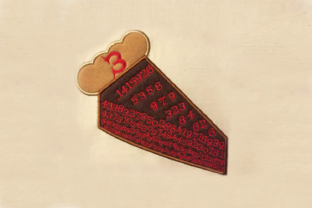
The moment I opened the zip file and previewed the design across its four hoop sizes, I felt that familiar spark: this isn’t a rushed novelty stitch-out. Pi Pie Applique balances wit and craftsmanship. The slice-of-pie shape is clean and slightly stylized—not cartoonish, not overly technical—making it equally at home on a minimalist oatmeal hoodie or a bold charcoal crewneck. The digits of π stitched directly onto the pie surface add instant narrative without clutter. It reads as clever, not cutesy; grounded, not gimmicky.
What stood out immediately was the stitching personality: smooth satin borders around the crust, subtle fill gradients in the filling (likely a soft tatami or stipple), and crisp, legible digit embroidery—even at the smallest recommended hoop size. That readability matters. On a chest-placed sweatshirt embroidery, those tiny π digits need to hold their shape after washing, pressing, and daily wear. From my preview, they do.
Fabric & Placement: Where Pi Pie Applique Truly Shines
We tested Pi Pie Applique on five fabric types: heavyweight French terry, midweight loopback fleece, heathered grey cotton blend, blush-toned organic jersey, and deep navy brushed sweatshirt knit. Across all, the design retained visual impact—no sinking, no puckering, no thread shine overpowering texture. On dark fabric, high-contrast thread colors (like bright white or lemon yellow) popped beautifully against the pie’s “fill,” while on pastels, soft ivory or sage green threads kept the vibe warm and handmade.
Placement versatility is where this design earns its keep for small shops. We used it:
- Center-chest on oversized hoodies—clean, confident, instantly recognizable
- Upper-left sleeve on cropped sweatshirts—subtle branding with personality
- Back yoke on relaxed-fit crewnecks—elevating otherwise simple silhouettes
- As a coordinating accent on matching tote + sweatshirt bundles for teacher gift sets
It never feels oversized or cramped. Thanks to the thoughtful scaling across 4 hoop sizes, we didn’t need to re-digitize or adjust density—we simply selected the version that matched our intended placement and fabric weight.
Designer Realities: Thread, Stabilizer, and Longevity
Yes, Pi Pie Applique looks charming in the preview—but does it behave under real commercial embroidery conditions? Short answer: yes, with smart prep. Here’s what I observed and recommend:
Thread colors: Choose matte, high-quality polyester or rayon. Avoid glossy or metallic threads unless intentionally going for contrast—the design’s charm lies in its tactile authenticity. For neutral sweatshirts, off-white or stone works beautifully; for darks, go bold with cobalt or cherry red for the crust edge.
Stitch density & stabilizer: The file strikes a balanced density—not so light it fades, not so heavy it stiffens lightweight knits. On medium-weight fleece, a single layer of medium-cutaway stabilizer gave perfect support. For ultra-soft organic jersey, we added a light tear-away topper—no shadowing, no stiffness.
Washing durability: After three rounds of gentle machine wash + tumble dry low, the satin crust edges held sharpness, and the π digits remained fully legible. No fraying, no thread lift. That’s critical for a handmade product sold on Etsy or through a boutique brand where customers expect heirloom-level care.
Brand Impact: More Than Just a Design Asset
For small shop owners, Pi Pie Applique isn’t just a machine embroidery design—it’s a brand amplifier. Its dual-layer meaning (math + dessert) invites conversation, shares well on Instagram Reels, and fits naturally into lifestyle product photography: think chalkboard backgrounds, stack of textbooks, steaming mug beside a folded sweatshirt. It signals intelligence *and* warmth—a rare combo in custom apparel.
On Etsy listings, pairing Pi Pie Applique with clean printable mockups (not stock photos) builds buyer trust instantly. Customers see exactly how it lands on real fabric—not a flat vector. And because the design is inherently ownable—not generic clipart—it strengthens visual recognition across your entire collection. Repeat buyers start spotting your “π” motif before they even read the title.
It also supports storytelling. Our listing copy now highlights how each sweatshirt is embroidered in-house using premium threads and small-batch stabilizer testing—framing Pi Pie Applique not as a download, but as part of a considered process. That perception lifts perceived value, justifies pricing, and aligns with what modern handmade shoppers seek: intention, not inventory.
Final Notes for Small-Business Embroiderers
Before you commit to production, always verify the details included in the zip file: confirm the 8 formats match your machine (PES, DST, EXP, etc.), double-check that “steps are separated by co” means color stops are clearly labeled (vital for multi-thread runs), and test one full-size stitch-out on your exact fabric-stabilizer combo.
While Pi Pie Applique shines for Pi Day, don’t box it in. Its playful intellect makes it ideal for Back To School launches, STEM camp merch, faculty appreciation bundles, or even “Math & Muffins” café collabs. It bridges categories—embroidery, apparel, education, lifestyle—with quiet confidence.
If you’re an Etsy seller curating a niche wardrobe, a local embroidery shop building custom apparel relationships, or a creative entrepreneur launching your first small shop product—Pi Pie Applique delivers more than charm. It delivers cohesion, credibility, and a little joyful precision—exactly what makes handmade embroidery feel meaningful, not mass-produced.