Airplane: A Playful, Premium Sweatshirt Embroidery Design
First Impressions: Bright, Balanced, and Built for Charm
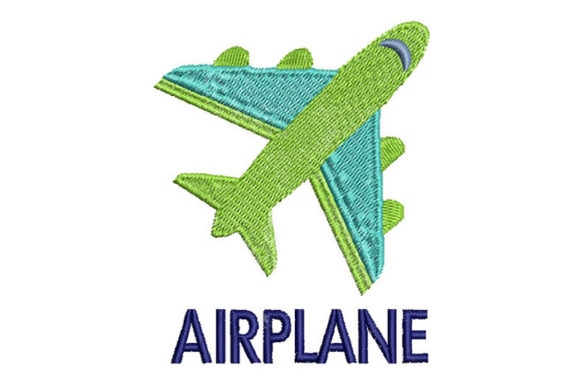
As an embroidery designer who’s stitched hundreds of boutique collections—from coastal linen tees to cozy winter hoodies—I opened Airplane with quiet curiosity. What landed on my screen wasn’t just another transportation-themed motif—it was a cheerful, confident composition: clean winglines, a rounded fuselage, and subtle yet intentional color blocking that suggests thoughtful thread selection. The description calls it “colorful,” and that’s accurate—but more importantly, it’s *curated*. This isn’t chaotic brightness; it’s joyful restraint. The layout feels balanced for chest placement on a standard unisex sweatshirt, with generous negative space around the wings—critical for avoiding fabric puckering and ensuring crisp stitch definition.
Sweatshirt-Ready Personality: Casual Meets Collectible
Airplane lands perfectly between playful and polished—a rare sweet spot for small clothing brands. On heather grey or oatmeal French terry, it reads as effortlessly cool: minimalist enough for a modern lifestyle brand, yet expressive enough to spark conversation. On charcoal or navy fleece, the contrast lifts beautifully—especially if your thread palette leans into saturated teals, sunflower yellows, and coral accents. And yes, it shines on pastels too: mint, blush, or buttercream sweatshirts let the design feel gently nostalgic, like a vintage storybook illustration reimagined in thread.
For oversized hoodies? The scale holds. The wingspan is generous without overreaching—no awkward stretching across seams or distortion at the shoulder. As a sleeve accent (left cuff or upper bicep), it adds subtle storytelling without shouting. As a back design? It scales elegantly—especially when centered above the waistband or paired with a small typographic tagline (“Adventure Starts Here,” for example). That versatility makes Airplane more than decoration—it becomes part of your boutique brand’s visual language.
Design Integrity: Does It Feel Handmade—Or Just Hand-Finished?
Here’s where many digital embroidery files falter: they look sharp on screen but lose warmth in thread. Not Airplane. Its stitching personality is friendly and tactile—slight curve variations in the tail, gentle satin-stitch gradients on the fuselage, and just enough fill-stitch texture to suggest hand-guided care. There’s no harsh vector rigidity. That human rhythm builds buyer trust. When customers scroll your Etsy shop or see your Instagram flat lay, Airplane doesn’t read as “stock”—it reads as *designed*, like every other detail in your small shop product lineup.
Practical Considerations for Commercial Embroidery
Let’s talk real production:
- Thread color contrast: Works best with high-contrast thread pairings—think white on black, navy on cream, or mustard on slate. Avoid low-contrast combos (e.g., light grey on heather grey) unless you’re intentionally going minimalist.
- Stitch density & fabric texture: Given its “colorful airplane” character, I’d expect moderate stitch density—not overly dense (which can stiffen soft fleece) nor too sparse (which risks fraying on repeated washes). Always test on your exact sweatshirt fabric: loopers behave differently on 100% cotton vs. cotton-poly blends.
- Stabilizer choice: Medium-weight cutaway works best for long-term durability, especially on ribbed cuffs or curved hems. For lightweight French terry, try a tear-away + light cutaway hybrid to maintain drape.
- Hoop size & placement: Designed for standard chest placement (approx. 4–5" wide), it fits comfortably within common hoop sizes. No awkward re-hooping needed for left-chest positioning—clean, one-and-done setup.
- Small-size readability: At 3.5", the propeller and window details remain legible—ideal for kids’ sweatshirts or petite sizing. But always verify your embroidery file includes multiple sizes; some digital embroidery files only ship one dimension.
Why Airplane Elevates Your Boutique Brand—Beyond Aesthetics
This isn’t just about prettiness. Airplane strengthens your handmade product narrative. In a market flooded with generic prints, a well-executed machine embroidery design signals craftsmanship, intention, and attention to tactile experience. Customers pay more for that feeling—and they remember it. When styled in lifestyle product photography (think: a child mid-laugh, hoodie slightly rumpled, Airplane catching afternoon light), the design adds warmth and narrative depth. It also performs strongly in printable mockups: clean lines translate crisply to digital previews, helping your Etsy seller listings convert faster.
For back-to-school launches or holiday gifting, Airplane taps into universal themes—wonder, journey, discovery—without leaning into cliché. It avoids gendered coding, making it inclusive across age and identity. And because it sits in the Transportation category while feeling distinctly artistic—not technical or industrial—it bridges function and fantasy. That duality is gold for creative entrepreneurs building emotionally resonant brands.
A Final Note to Small Shop Owners & Embroidery Shops
Before cutting your first stabilizer sheet: confirm your embroidery file includes full commercial usage rights—especially if you’re selling finished apparel or offering custom embroidery services. Also double-check whether the file supports your machine format (.dst, .pes, .jef, etc.) and whether it includes color-sequence notes. These aren’t afterthoughts—they’re foundational to scaling your small shop product safely and confidently.
Airplane is more than a digital embroidery file. It’s a mood, a moment, a tiny vessel of joy stitched into fabric. When placed thoughtfully on a premium sweatshirt—paired with intentional branding, smart photography, and genuine storytelling—it doesn’t just decorate apparel. It invites connection. And in today’s handmade economy, that’s the most valuable stitch of all.